
Monday, December 10, 2012

Friday, December 7, 2012
The Renaissance - Italy
Two reasons why the Renaissance started and blossomed in Italy were that first, Italy was composed of wealthy city-states such as Rome, Venice, Florence, etc., and families from the middle class who stimulated the economy to prosper; second, Italy was the center of the Roman Empire where the Church was located. The Black Death had caused many deaths during the late Medieval time and hence a new middle class, as bankers, merchants, and tradespeople, emerged with new demand for goods and services and therefore had come to prosper Italy. People from neighboring regions also came here to trade because of its diverse market of goods as well as art and other things. The middle-class desired to show off their wealth by indicating their style in fashion, houses, food, and reputation; which caused them to promote education among the youth and sponsor great artists/architects/merchants/explorers to showcase paintings, buildings, etc. Last but not least, since the Church was located in Italy, it was provided with solid financially support from the Pope. With its prosperous historical legacies, wealthy families, and the Church's support, Italy was the perfect place for the Renaissance to start.
Tuesday, December 4, 2012
Inspiration Maps document: Scientific Revolution - Lisa Bui

Monday, November 26, 2012
Michelangelo - Pieta
a) Michelangelo - Pieta (sculpture). It was sculpted in Rome when Michelangelo was about 22 (1498 - 1499). It is currently displayed at St. Peter's Basilica in Vatican City.
b)

c) Full name: Michelangelo di Lodovico Buonarroti Simoni (1475-1564)
DOB: March 6th, 1475 (in Caprese, a small village close to Florence)
His father was a magistrate but he as a teen was apprenticed to a Florentine painter named Domenico Ghirlandajo. However later on, he was inspired by another teacher, the sculptor Donatello, who later presented him an opportunity to move into the palace of Lorenzo the Magnificent, the powerful ruler of the Medici family. There, he studied classical sculpture in the Medici gardens and was exposed to prominent poets, scholars, and learned Humanists for 19 years. He also attained the permission of the Catholic Church to study cadavers for insight into anatomy. This experience had enabled to be the leader of the Italian Renaissance; he had later relocated in Rome and produced various masterpieces including Battle of the Centaurs, painting on the ceiling of the Sistine Chapel, the David, the Cupid, the Petia, etc. He also was engaged by Pope Paul III as principle architect to supervise the building of St. Peters. Although being a painter, a sculptor, an architect, and a poet himself, Michelangelo never married and lived a life with few friends. His temper and impulsive attitude alienated many people who had known him.
Fun facts: He lived to see the publication of two biographies about his life, written by Giorgio Vasari and Ascanio Condivi. He had also worked with Leonardo da Vici.
d)The Pieta means Pity or Compassion. It represents Mary sorrowfully holding and contemplating the dead body of Christ. It is made out of marble and is composed of intricate details of the flesh, composition, and expression. The statue was commissioned by the French cardinal Jean de Billheres, who was a representative in Rome; it was made for the cardinal's funeral monument. The theme was influenced by Northern origin, popular in France but not Italy. Michelangelo's interpretation of the Pieta is unique and different from the precedents for he introduced Mary with a youthful and calm expression even though holding the dead body of Christ; the usual depiction of art back then was pain. He had finished carving it single-handedly in less than two years, producing a masterpiece that balances the Renaissance ideals of classical beauty with naturalism. By presenting the divine beauty of the statue, Michelangelo wanted to convince people that not only pain resembles redemption but also the absolute earthly beauty - which is perfect by human standards and therefore divine.
e) The sculpture demonstrates Anatomy, Perspective, Classicism, Youthfulness, Composition, and Religion. It scores a 6/9 on the list of Nine Characteristics of Renaissance art.
Anatomy = it shows the intricate details of the sculpture (veins, bones, position, facial expression, etc.)
Perspective = It is 3-D and can be viewed as different angles with different feelings and interpretations
Classicism = It portrays Mother Mary and Christ - who lived during the Roman time and dressed accordingly to its culture.
Youthfulness = It shows youthfulness on Mother Mary's face
Composition = It has a great composition which points the attention to Mary's eyes contemplating Christ's dead body
Religion = It portrays Mother Mary holding Christ's dead body after his crucifixion.

http://www.moodbook.com/history/renaissance/michelangelo-pieta.html
http://www.saburchill.com/history/biblio/009.html
http://smarthistory.khanacademy.org/michelangelo-pieta.html
http://www.biography.com/people/michelangelo-9407628?page=3
http://upload.wikimedia.org/wikipedia/commons/6/60/Michelangelo's_Pieta_5450_cropncleaned_edit-2.jpg
 Posted with Blogsy
Tuesday, November 20, 2012
Being a Child in the Renaisance
Being born a peasant in a family of eight, I'm always expected to work on the fields as soon as I get out of bed every day. It has become such a routine for me in a way that boredom has just become an ordinary emotion. My dad died when he was 30, leaving my mom single-handedly raise the six of us. Two of my siblings grew ill and passed away at a young age, so it's not a happy story from the beginning. I mean, life can be so unfair! I have been observing life around here and noticed that we as children have no rights at all! We're always expected to dress and act like adults; based on our background we're expected to do certain tasks that our parents have previously planned for us. At least I feel better still having my mother, for I have a friend who is raised in an orphanage because was born to a slave mother.
Today as any other ordinary day, I woke up and hurried myself to the field. However on the way, I've encountered a merchant from down south. He asked me for directions and I gladly helped him. We talked a little bit more and then for some reason, he invited me to come with him, giving the reason that I can "accompany him for the day" since he didn't know this area that well. He offered to pay me so why not took the job, right?
He told me stories about where he comes from and what it's like to be a merchant. He said that he takes his job seriously and all, yet he spares some time for traveling and learning different cultures. He had just arrived here yesterday so now he was trying to browse about the city to see what it could offer. In appreciation for his eagerness, I attentively took him to famous locations and introduced him our local special goods. I also told him about my family and how us children have no rights; his reaction was priceless. Another interesting story he told me, about how children are raised differently from where he's from: children are meant to play and shielded from the worries of the world; they are to work hard at their studies to prepare for their future. Education is extremely important there, and noble children often go to school four to six hours a day; they attend university at the age of fifteen. At school, they are trained under a disciplinary and harsh environment. Furthermore, they are also taught the ways of warrior and courtier, which includes riding, swordmanship, dancing, and the arts of war. The sad thing is, it's not that much different for peasants so I guess I was destined to be born this way.
Another thing I found extremely intriguing is that noble children there marry at an early age with the purpose of gaining power and prosperity for their family and produce heirs to continue dynasties. In the end, I guess we are all born to do certain tasks; tasks that are already planned beforehand. If you're lucky enough to be born a noble, your life will be luxurious - yet it takes a greater endurance of training and hardwork. If you're born a peasant than all you'll do is do field work or take care of the households until you marry and have kids and pass away. If you're born an artist, then you're especially trained to be a good one at a young age. If you're born to merchant parents than you're especially trained to be a good merchant at a young age, also. All children are expected to do what their parents want them to, they have no choice at all!
Source:
Children of the Renaissance
Today as any other ordinary day, I woke up and hurried myself to the field. However on the way, I've encountered a merchant from down south. He asked me for directions and I gladly helped him. We talked a little bit more and then for some reason, he invited me to come with him, giving the reason that I can "accompany him for the day" since he didn't know this area that well. He offered to pay me so why not took the job, right?
He told me stories about where he comes from and what it's like to be a merchant. He said that he takes his job seriously and all, yet he spares some time for traveling and learning different cultures. He had just arrived here yesterday so now he was trying to browse about the city to see what it could offer. In appreciation for his eagerness, I attentively took him to famous locations and introduced him our local special goods. I also told him about my family and how us children have no rights; his reaction was priceless. Another interesting story he told me, about how children are raised differently from where he's from: children are meant to play and shielded from the worries of the world; they are to work hard at their studies to prepare for their future. Education is extremely important there, and noble children often go to school four to six hours a day; they attend university at the age of fifteen. At school, they are trained under a disciplinary and harsh environment. Furthermore, they are also taught the ways of warrior and courtier, which includes riding, swordmanship, dancing, and the arts of war. The sad thing is, it's not that much different for peasants so I guess I was destined to be born this way.
Another thing I found extremely intriguing is that noble children there marry at an early age with the purpose of gaining power and prosperity for their family and produce heirs to continue dynasties. In the end, I guess we are all born to do certain tasks; tasks that are already planned beforehand. If you're lucky enough to be born a noble, your life will be luxurious - yet it takes a greater endurance of training and hardwork. If you're born a peasant than all you'll do is do field work or take care of the households until you marry and have kids and pass away. If you're born an artist, then you're especially trained to be a good one at a young age. If you're born to merchant parents than you're especially trained to be a good merchant at a young age, also. All children are expected to do what their parents want them to, they have no choice at all!
Source:
Children of the Renaissance
I love to learn. But I never had the chance.
Being born a peasant in a family of eight, I'm always expected to work on the fields as soon as I get out of bed every day. It has become such a routine for me in a way that boredom has just become an ordinary emotion. My dad died when he was 30, leaving my mom single-handedly raise the six of us. Two of my siblings grew ill and passed away at a young age, so it's not a happy story from the beginning. I mean, life can be so unfair! I have been observing life around here and noticed that we as children have no rights at all! We're always expected to dress and act like adults; based on our background we're expected to do certain tasks that our parents have previously planned for us. At least I feel better still having my mother, for I have a friend who is raised in an orphanage because was born to a slave mother.
Today as any other ordinary day, I woke up and hurried myself to the field. However on the way, I've encountered a merchant from down south. He asked me for directions and I gladly helped him. We talked a little bit more and then for some reason, he invited me to come with him, giving the reason that I can "accompany him for the day" since he doesn't know this area that well. He offered to pay me so why not took the job, right?
He told stories about where he comes from and what it's like to be a merchant. He said that he takes his job seriously and all, yet he spares some time for traveling and learning different cultures. He had just arrived here yesterday so now he was trying to browse about the city to see what it could offer. In appreciation for his eagerness, I attentively took him famous locations and introduced him our local special goods. I also told him about my family and how us children had no rights; his reaction was priceless. Another interesting story he told me, about how children are raised differently from where he's from: children are to meant to play and shielded from the worries of the world; they are to work hard at their studies to prepare for their future. Education is extremely important there, and noble children often go to school four to six hours a day; they attend university at the age of fifteen. A boy's education is more extensive and he is taught arithmetic, Latin, Greek,
Education during the Renaissance became increasingly more important and popular. Noble children often attended four to six hours of school per day and went to work or to a university at age fifteen. Usually, education started around age seven, though often younger. Upper-class girls might be sent to convents for education until either her family found her a husband or she became a nun, saving her family the expense of a dowry.
A boy's education was more extensive. A boy's education was either by a governor, college, or a tutor at home. Students, primarily in Italy, were often taught grammar and arithmetic because those were the tools of a merchant. However, privileged families such as the Medici family had their children instructed in Latin, Greek, logic, and philosophy. Boys everywhere learned a little Latin, philosophy, and rhetoric as part of a good education. If attending a school, a boy faced harsh discipline, long hours, and bad food among other uncomfortable factors of everyday life. Along with this formal education, a noble boy was taught the ways of warrior and courtier, which included riding, swordsmanship, dancing, and the arts of war.
Peasants were usually completely uneducated, stripping away from them one of the key factors in social mobility. Artisans would be educated through an apprenticeship or at home, although it was possible for a boy to attend a cathedral school to become a member of the clergy.
Marriage for noble children was usually very early as a result of the child's obligation to gain power and prosperity for their family and produce heirs to continue dynasties. In lower classes, a man did not marry until they had obtained land or established themselves in a trade. Women of those classes usually waited until their families could raise a proper dowry before they married. Women were usually significantly younger than the men they married.
world, and to work hard at their studies in preparation for the time when their presumably carefree days would end
world, and to work hard at their studies in preparation for the time when their presumably carefree days would end
Sent from my iPadFriday, November 16, 2012
Module 1 Part 2
Please identify at least one modern day example of someone who is Machiavellian and explain how they fit this description. Do you agree that it is better to be feared than loved? Does the end justify the means?
One modern day example of someone who is Machiavellian would be Kim Jong Un - the current Northern Korean Chairman. Succeeded the position after his father's death in December, 2011, Kim Jong Un followed his footsteps in developing a nuclear warhead that could hit the United States within a few years. Additionally, he also alienated the Obama administration as well as provoked China because of the country's decision on launching the ballistic missile test - which posed the danger of debris falling into maritime sea lanes, populated islands, and the South China Sea. In order to do these missions, he has spent a massive expense on nuclear development instead of improving the citizens' life as he has previously professed. The country's obsession with military hardware has taken the chairman's attention away from doing the necessary thing - he only does what he thinks is right. In short, he fits the description because when he does something, he "does it right" - he risks everything in order to fulfill his idealism no matter if it might hurt others; it is rather devoid of morality.
I agree that it is better to be feared than loved because life is not perfect despite however we can imagine it to be. It's reality, and reality requires wisdom and experiences. To be feared is to be cautious- to prepare oneself's from the disappointment of hurt and failure. To be feared is to be realistic; it doesn't mean to lose confidence and not to have faith in oneself. It depends on the definition of fear, but I'll define it as being wise, which means to be prepared to take in the consequences. It doesn't mean to close up oneself and fear to express oneself.
It depends whether if the end justifies the means. Sometimes it is worth it to risk everything for the final result, yet at other times it is not. For instance, the U.S. dropping two atomic bombs on Japan during World War II is indeed one example of 'the end justifies the means' for even though it the action has left a disastrous impact on Japan, it ended the war which prevented further suffering. At other times, it might not be worth it to give up everything for your final desire because at the end, you'll probably lose everything along the way that once has been so precious to you. There's no such thing as just simply black or white, right or wrong - it depends on what situation it is and what values one has in order to make his/her decisions.
Source: http://topics.nytimes.com/topics/reference/timestopics/people/k/kim_jongun/index.html
One modern day example of someone who is Machiavellian would be Kim Jong Un - the current Northern Korean Chairman. Succeeded the position after his father's death in December, 2011, Kim Jong Un followed his footsteps in developing a nuclear warhead that could hit the United States within a few years. Additionally, he also alienated the Obama administration as well as provoked China because of the country's decision on launching the ballistic missile test - which posed the danger of debris falling into maritime sea lanes, populated islands, and the South China Sea. In order to do these missions, he has spent a massive expense on nuclear development instead of improving the citizens' life as he has previously professed. The country's obsession with military hardware has taken the chairman's attention away from doing the necessary thing - he only does what he thinks is right. In short, he fits the description because when he does something, he "does it right" - he risks everything in order to fulfill his idealism no matter if it might hurt others; it is rather devoid of morality.
I agree that it is better to be feared than loved because life is not perfect despite however we can imagine it to be. It's reality, and reality requires wisdom and experiences. To be feared is to be cautious- to prepare oneself's from the disappointment of hurt and failure. To be feared is to be realistic; it doesn't mean to lose confidence and not to have faith in oneself. It depends on the definition of fear, but I'll define it as being wise, which means to be prepared to take in the consequences. It doesn't mean to close up oneself and fear to express oneself.
It depends whether if the end justifies the means. Sometimes it is worth it to risk everything for the final result, yet at other times it is not. For instance, the U.S. dropping two atomic bombs on Japan during World War II is indeed one example of 'the end justifies the means' for even though it the action has left a disastrous impact on Japan, it ended the war which prevented further suffering. At other times, it might not be worth it to give up everything for your final desire because at the end, you'll probably lose everything along the way that once has been so precious to you. There's no such thing as just simply black or white, right or wrong - it depends on what situation it is and what values one has in order to make his/her decisions.
Source: http://topics.nytimes.com/topics/reference/timestopics/people/k/kim_jongun/index.html
Sources for the American Advertising Pitch Project
http://en.wikipedia.org/wiki/Pyramid_of_the_Magician
https://blogger.googleusercontent.com/img/b/R29vZ2xl/AVvXsEiUpUPnswrDzjVISp70RoZN9y8q_DA-1U6N8X6FlGGfxKIeJH-yMDM76rNXsKPwVK_TA8Kyk6AdGenOKdQkGnfx_0Qq6N_1gcH8hGOjMVWzhGNro0EQNSWyVZN5wOeiUPqSpjsEJiKm0ro/
s1600/uxmal%2Bpyramid.jpg
http://www.moon.com/destinations/cancun-the-yucatan/the-state-yucatan/the-puuc-route/uxmal-
archaeological-zone/the-ruins/pyramid-the-magician
http://www.hanksville.org/yucatan/El_Advino.html
http://www.latinamericanstudies.org/uxmal-00/uxmal-01-9.gif
http://www.sacredsites.com/americas/mexico/images/pyramid-magician-500.jpg
http://eagleincomemarketing.com/news/wp-content/uploads/2012/03/billboard1.jpg
http://upload.wikimedia.org/wikipedia/commons/c/c0/Mayan_-_Dwarf_Figurine_-
_Walters_20092036_-_Detail_A.jpg
Thursday, November 8, 2012


Tuesday, October 30, 2012
Inspiration Maps document: Lisa Bui - Incas

Sunday, October 28, 2012
Hunmin Chongum, The Proper Sounds for Instructing the People
1443


Ever since I was young, I’ve loved everything about Korea: Korean food, Korean movies, Korean stars, Korean fashion, and especially Korean language – the sounds of the words are extremely cute! However, my mom has a strong opposition against me having interest in Korea because of political and historical issues; every time I do something associated with Korea, I have to do it secretly so my mom wouldn’t yell at me. Therefore, she doesn’t know that I’ve been watching Korean dramas over the years – which I think are quite well sponsored and produced. Since I’ve always dreamed of being a film director in the future, Korean dramas really give me inspirations because of their techniques in acting and editing, plus the fact that its diverse traditions are extremely worthy to be shown on film. Therefore, after two encountering, one with Askia the Great of the Songhai Empire and one with General Yue Fei of the Southern Song Empire, I truly wish that magic happens again so I can fulfill my dream of meeting the most remarkable king of Korea – King Sejong who reigned from 1418-1450; so that I could actually talk to him and make a film out of the experience. He was the fourth king of the time and he had contributed many achievements to the nation; one of the many great achievements was of course Hangul – the Korean alphabet – which still lasts until today.

I kept on researching about him hoping that magic would work on me again, yet my anticipation was in vain. I then just gave it up and decided to continue a Korean drama that I’ve been working on to finish, called “Rooptop Prince” – which is coincidentally about a Joseon prince travelling to the future to solve the mystery of the death of his bride. The movie was rather melancholy and depressing, plus the music was so traumatic that it actually made my heart beat faster. Anyway, I felt asleep watching it… and then I saw myself scribing Korean characters on a piece of paper… It was rather a scrap paper with brainstorming of strokes and characters. Even though I knew it was still me, a part of me felt extremely different, extremely brilliant! For some reason without my conscious, I went ahead and put down some sentences explaining something I wasn’t sure about:
The velar ㄱ (k) depicts the root of the tongue blocking the throat
The alveolar ㄴ(n) depicts the outline of the tongue touching the upper palate.
The labial ㅁ (m) depicts the outline of the mouth.
The dental ㅅ (s) depicts the outline of the incisor.
The laryngeal ㅇ (zero initial) depicts the outline of the throat.
The pronunciation of the aspirated velar ㅋ (k') is more forceful than that of ㄱ (k), and therefore a stroke is added.
The roundㆍrepresents Heaven.
The flat ㅡ represents Earth.
The uprightㅣrepresents Man.
These three shapes are combined to derive other vowels: ㅏ, ㅑ, ㅓ, ㅕ, ㅗ. ㅛ. ㅜ, ㅠ. EX: 'Moon' in Korean is "달" = ㄷ(consonant)+ㅏ(vowel)+ㄹ(consonant).

Looking at what I just wrote, I remained dead silent and flabbergasted. Somehow this information was already in my brain and I just knew it. I was King Sejong for God’s sake! I knew that I was using Confucian principles to put down those rules for Hangul, in which the yin stands for feminine, passive, dark, dry, and cold, while the yang embraces the masculine, active, humid, bright, and hot. The interaction between these two principles also comprises the five elements of Fire, Earth, Metal, Wood, and Water. In short, according to the Yin-Yang and the five elements, each vowel or consonant is assigned with either a yin-or-yang property, and the five basic consonants resemble the five elements based on their placement in a character.
Just then, a servant came into the room and handed me some Eastern medicine, and I realized that I was suffering from neuralgia, diabetes, and poor eyesight. Still, I devoted the rest of my strength to the creation of Hangul because I knew that the language of my country is different from that of China and does not suit Chinese characters, and so it is my responsibility to create a suitable alphabet for my people. Consequently, even the uneducated are able to put their feelings into writing. I therefore dedicate Hangul to all my citizens, so let everyone practice them at their ease and adapt them to their daily use.

Source:
http://www.koreanhero.net/kingsejong/index.html#
http://cms.korea.net/upload/content/editImage/Joseon_map_eng.gif
http://www.koreanconsulate.on.ca/userfiles/Image/nationsimbol/sejong.gif
http://pds.joinsmsn.com/jmnet/koreajoongangdaily/_data/photo/2009/12/07213925.jpg
http://www.personal.psu.edu/faculty/g/j/gjs4/textbooks/PM-China/graphics/Ch6/11.gif
http://www.koreanhero.net/kingsejong/index.html#
http://cms.korea.net/upload/content/editImage/Joseon_map_eng.gif
http://www.koreanconsulate.on.ca/userfiles/Image/nationsimbol/sejong.gif
http://pds.joinsmsn.com/jmnet/koreajoongangdaily/_data/photo/2009/12/07213925.jpg
http://www.personal.psu.edu/faculty/g/j/gjs4/textbooks/PM-China/graphics/Ch6/11.gif
Sunday, October 21, 2012
精忠岳飞 - The Patriot Yue Fei
1142

It's interesting how my family can be so diverse, having members coming from all parts of Vietnam, Lao, the States, and China. China and Vietnam have a very tough past, and somehow they're still fighting each other; yet I'm extremely interested in Chinese history and art. Their lifestyle of respect and education had fostered many great minds, including Cao Cao, Bao Zheng, Shi Huang Di, Confucius, etc.
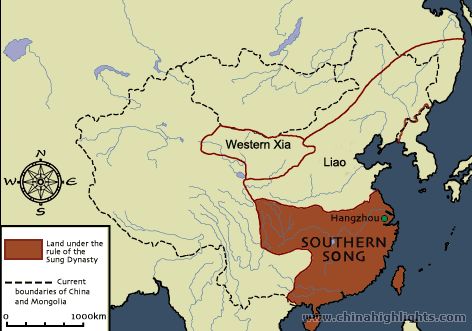
It has been over a year staying away from home, and sometimes the nostalgia is just too much to bear. My sister-in-law, who is a Chinese descendant, loves Chinese drama. Seeing me sad and all, she has come up with an idea that we should have a Chinese-drama marathon - an ordinary activity that I have done so many times with my family back in Viet Nam. After weeks of school work and activities, I eventually had time to carry out the plan with her last Friday. I was searching for a decent Chinese drama and ran through this one called "The Patriot Yue Fei", which is about a Chinese general during the Song dynasty. The trailer featured him as a mighty historical figure with a massive army that managed to defeat their enemies countless times. It was pretty interesting, but I wasn't into all that warfare and bloodshed, so I just went ahead and searched for another drama. The thing was, the internet just shut down, leaving me dumbfounded with the lagged trailer on YouTube. It kept lagging and playing that scene of the general holding up something while riding his horse over and over again - despite I've tried to stop it several times (for some reason it wouldn't let me shut down the page, too) I was so annoyed I slammed the laptop shut, closed my eyes and took a deep breath, opened both to see if it was back to normal, and realized that my feet hurt badly. I looked down to see that my feet were wearing some strange shoes that were extremely too small for my size. I was too shocked and tried to take a minute or so to take things in; once I regained my conscious, I called for my sister-in-law to see what was going on. However, she was nowhere to be found but instead next to me was a strange woman - whom I later found out that I was supposed to call mother. I immediately felt dizzy and nauseous, and it got worse when I raised my head to a scene of a strange man saying, "Oh well, if that's the price I must settle on, let's say it a yes for this concubine! After all her feet have spoken for her standard”, then he finished off with a row of despicable laughter. I dropped my jaw and widened my eyes, thinking "What the heck just happened?" Was I just sold to this stranger in front of me, or was I just hallucinating??? Nevertheless, I was too speechless to make any statement. I just recalled that after that someone dragged me to a room and dolled me up in a red traditional gown for a ceremony I did NOT anticipate. I honestly wanted my mom. Just then, I heard a piercing voice cracking outside my room, and then came a servant who informed that "my wedding" was canceled because something outrageous just happened. I tried to get out of the room as fast as possible to get away from this happening, but my feet hurt so bad I couldn't even stand. I therefore took off my shoes, just to see that my feet were distorted in a form that was too gross for me to even look at

However, I managed to run out to the street, and I realized that people were heading to see something. I asked a woman who was in her fifties next to me and was told that Yue Fei was going to be executed at Fengbo Pavilion. I had no idea where the pavilion was, so I just followed the crowd until it stopped and I realized that we were in front of a place where we weren't allowed to enter. I was so confused but was conscious enough to pick up a conversation behind my back, "Qin Hui is such a liar! He accused our general as a rebel though all he did as fought for our freedom!" Then some man in the crowd started to recite a poem in which I found out was called "The River Runs Red" - which was written by Yue Fei during one of his battles to spirit up his troops. It went like this,

In anger my hair hurls my hat from my head;
as I lean over the rail,
the rain’s fine mist ceases.
I raise my eyes to Heaven
and unleash a long cry;
how fierceness fills my breast!
Thirty years of work and fame – like dust and dirt;
eight thousand miles of road – like clouds and moon.
But I won’t wait in idleness
for white to take my youthful head,
for empty sorrow!
Jing Kang’s shame
is not yet washed away;
this minister’s hate –
when will it be quenched?
I’ll drive a war chariot and smash apart
the Helan mountain pass!
Then with a strong spirit,
I’ll feast on the flesh of Hu prisoners;
talking and laughing,
I’ll swig barbarian blood.
Count on me – I’ll make a new beginning,
gather up our ancient mountains and rivers
and present them to the Emperor, at the palace gate.
Even though I was not accustomed to what was going on, I could still feel the disappointment and the pain the people around me were in before the news that Yue Fei was to be executed. I didn't have a clear image of who he was, until someone around me spoke up and introduced himself as a soldier from Yue Fei's army, who had gone home after their troops were ordered to return to the capital. He said that just when General Yue Fei was threatening to attack and retake Kaifeng City - which was taken by the Jurchen invaders and consequently came under the rule of the Jin Dynasty, he was ordered by Emperor Gaozong to retreat so that a peace truce could be carried out with the Jurchens. Even though Yue Fei hesitated, he decided to go along with the emperor’s will due to his loyalty. However once he arrived home, he was immediately taken away by the guards and was later accused for rebelling against the empire…

Out of the blue, I heard my sister-in-law called for me and I tried to make my way out of the crowd toward her voice. I kept walking and walking until I tripped over a rock and lost my consciousness. Similarly to my last trip back to Gao, this time I also heard the Twilight Zone theme song playing in the background, while images of another strange man kept popping up around me. He looked like he was very upset with something, and very confused. One image of him popped up, saying that, "I shouldn't have done that. Who would understand for me? Murdering him wasn't my choice." Another image of him and another man popped up, saying, "You must stick to our original agreement, and that means Yue Fei is to be killed before any deal can be carried out!" I now had a sense of what was going on just when the last image of him popped up, this time with no sayings, yet it showed that the guy kept biting his tongue until he lost too much blood and died. By this time, I'm pretty sure he was Qin Hui - the one everyone was upset about because he had accused Yue Fei for being a rebel in order to carry out the peace truce with the empire’s long term enemy – the Jurchens.
References:
http://www.chinatownsfbay.com/2012/06/yue-feis-tragic-death/
http://rainybluedawn.com/translations/chinese/manjianghong.htm
http://mlncn.com/lib/knowl/history/china/song/south.html
http://images.chinahighlights.com/chinamap/ancient/southern-song-map1.gif
http://images.chinahighlights.com/chinamap/ancient/southern-song-map1.gif
Sunday, October 14, 2012
Gao - Songhay Empire
1537


I don’t know if it was
real. It seemed like it was, yet I’m not so sure.
I just had the most
bizarre experience, the most surrealistic one, yet it was the awesomest
experience I’ve ever had. (Please excuse my poor grammar)
It was 12 o’clock and
my eyes were trying to fight hard against the sleepiness, plus the brightness
on the computer’s screen was extremely annoying. I wanted to go to sleep, yet
Mrs. Hals’ Photojournalist Portfolio Project kept me up all night. It was then
12:25 when I was reading Askia Mohammed’s background information – Askia the
Great who was known as an emperor, military commander, scientist, and political
reformer of the Songhai Empire. A picture of him was positioned on the right of
the article and I went ahead to check it out, giving myself a break from
reading all the jumping words. Having an interest in art and all, I observed at
the picture intensely and tried to recognize some African art techniques. The
color composition was quite interesting, very tribal and very desert-ish. Yet,
there was an uncanny touch about it. I sat back in my chair and yawned… but
then suddenly I noticed something in the corner of my eyes: Askia in the
picture just blinked at me. I was like, “OMG, I must be seeing things. I don’t want
to be in a horror movie at this hour.” I then checked it one more time by
looking straight at his black hollow eyes, just when I felt like someone just
hit me on the head and everything went blurry.

That music in Twilight
Zone started playing and I felt like I was on a time machine for all I saw was that
I was going deeper into a spiral hole with dust and sparkles surrounding me. I
eventually fell out of that hole onto a bank of a river. I had no idea where I
was, and that fear freaked me out when I started to notice the people walking
passed me were not my kind. They were also dressed in a quite different fashion
than mine. Anyway, they were talking about me, something like “Who’s this girl?”
or “Oh poor girl, she looks lost.” Now this time I’m completely flabbergasted:
how could I understand such strange language? I don’t speak anything besides
English and Vietnamese, so….Anyway, a woman eventually came up to me and asked,
“Are you okay girl? Do you need any help?” All that I could come up with was, “Um…
Where am I?” She answered, “The bank! The bank of the Niger River! I continued,
“What year is it?” She seemed confused, “Um… It’s the reign of our great leader
Ali the Great! Ali the Great!”
Funny I thought, yet
the whole thing seemed so realistic. I had no idea what got into me and this whole
thing was such a joke, but somehow I managed to stand on my feet and made my
way further into the land. I walked what seemed like an hour before I stopped
in front of a grand, magnificent, unbelievably legit palace layered by gold –
or it looked like so. There were guards on the side, but still I skulked
forward hoping they wouldn’t see me – I know, how smart was that? Anyway, they
didn’t see me! It was weird, yet very satisfying at the same time; it was as if
I was invisible! Once I entered the palace, I just went around trying to find
something that I wasn’t even sure what; but then I noticed a very strange light
form a room at the end of the corridor. I curiously walked in to the room,
frightened a little and jumped backward when I saw a man at his desk, sleeping
though he was sitting straight with his hand holding his head. Knowing that I
should be safe for now, besides the fact that I was invisible, I picked up the
diary on his desk that I’ve spotted before; settled myself down on a chair
besides the only window of the room. I managed to tear off a page and this is
it:

“How is it?” The man
asked me out of the blue, and I just remained deadly silent. How could he see me ? I thought, but
still, this whole thing has been extremely unexpected anyway.
He then continued, “Well
how did you get in here, didn’t the guards get to you?”
I answered, “Umm... I’m
not sure how I made my way in here but…”
“Amazing isn’t it? How
this whole thing came to be? Too bad I’m old now… and blind. I wanted it to be
a secret for as long as possible for I didn’t want anyone to think I now am a
sick and weak ruler. It’s heard around that I had an evil eye, and so no one
dared look directly into them for they fear of a curse. I don’t think it’s
going to be as secret forever though…”
I couldn’t really
reply to what he said, I mean, I just felt bad for him. I was too scared to
speak anyway. That’s why his eyes were so
hollow I thought, and it’s strange how they got me here. Probably it’s an
omen. This time I took all my gut and looked straight into his eyes once again,
and once again I felt something hit me in the head and things went blurry.
Not surprised this
time, I woke up to find that I’m at the Tomb of Askia – I’m so glad that I
researched about this first so now I’m not that dumbfounded standing in front
of it anymore. So, what I know is that it’s located in the town of Gao. It
looks plain except for the spikes on the outside, yet it comprises a quite
complex structure: the pyramidal tower, the two flat-roofed mosques, the necropolis
and the white stone square. The thing I find the most interesting is that it
was built by Askia the Great himself in 1495. It’s considered as the most significant
conserved trace of the powerful and rich Songhai Empire; it’s also known as a
fine example of the monumental mud-building traditions of the West African
Sahel. It’s designated as a UNCESCO World Heritage Site, and today the burial
place of Askia the Great is known as the Great Mosque of Gao.

Resources:
http://en.wikipedia.org/wiki/Askia_Mohammad_I
http://blackhistory.com/content/62209/askia-the-great
http://en.wikipedia.org/wiki/Tomb_of_Askia
http://whc.unesco.org/en/list/1139
http://apwh.pbworks.com/f/askia.jpg
http://en.wikipedia.org/wiki/File:SONGHAI_empire_map.PNG
http://en.wikipedia.org/wiki/Askia_Mohammad_I
http://blackhistory.com/content/62209/askia-the-great
http://en.wikipedia.org/wiki/Tomb_of_Askia
http://whc.unesco.org/en/list/1139
http://apwh.pbworks.com/f/askia.jpg
http://en.wikipedia.org/wiki/File:SONGHAI_empire_map.PNG
Monday, October 1, 2012
Aleppo, Damascus - 10/01/2012
1. http://www.foxnews.com/world/2012/08/10/syrian-troops-battle-rebels-near-aleppo-and-damascus/
http://articles.latimes.com/2012/sep/29/world/la-fg-syria-violence-20120930
2. Last Friday, Aleppo (near Damascus) was bombed by Syrian government forces, aiming to destroy the rebel positions from the ground and air in the city; because the opposition fighters have been protesting against the increasing use of aerial attacks of the Syrian government troops. Then on Saturday, the Souk Madina in Aleppo, the nation's most populous city where rebels and government troops have been battling for control for more than two months, was set on fire; both sides blamed each other for the blaze, though the rebels were trying to extinguish it. It was reported that hundreds of shops had been burned, and the site is traumatically destroyed. The Souk is considered a World Heritage city by UNESCO, where it holds many ancient history and wealth of architectural monuments. Ever since the civil war started in July 20, many historical and cultural sites of Syria have been destroyed - many of those are listed under the World Heritage list. Therefore, there's a big concern about the status of the sites and Syria itself for it has been a crossroad of civilization for centuries, having a rich cultural and commercial legacy. Other parts besides the sites in Syria were destroyed, too, such as the infrastructure, towns, and other villages. More than 20,000 people were reported dead ever since the fight began.
http://articles.latimes.com/2012/sep/29/world/la-fg-syria-violence-20120930
2. Last Friday, Aleppo (near Damascus) was bombed by Syrian government forces, aiming to destroy the rebel positions from the ground and air in the city; because the opposition fighters have been protesting against the increasing use of aerial attacks of the Syrian government troops. Then on Saturday, the Souk Madina in Aleppo, the nation's most populous city where rebels and government troops have been battling for control for more than two months, was set on fire; both sides blamed each other for the blaze, though the rebels were trying to extinguish it. It was reported that hundreds of shops had been burned, and the site is traumatically destroyed. The Souk is considered a World Heritage city by UNESCO, where it holds many ancient history and wealth of architectural monuments. Ever since the civil war started in July 20, many historical and cultural sites of Syria have been destroyed - many of those are listed under the World Heritage list. Therefore, there's a big concern about the status of the sites and Syria itself for it has been a crossroad of civilization for centuries, having a rich cultural and commercial legacy. Other parts besides the sites in Syria were destroyed, too, such as the infrastructure, towns, and other villages. More than 20,000 people were reported dead ever since the fight began.
Friday, September 21, 2012
Inspiration Maps Lite document: Byzantine Empire



Monday, September 17, 2012
Louis XIV
Louis XVI was a King of French with the longest reign. He was also known as the King of Sun or Louis the Great.

Subscribe to:
Posts (Atom)